Dominic Barnett
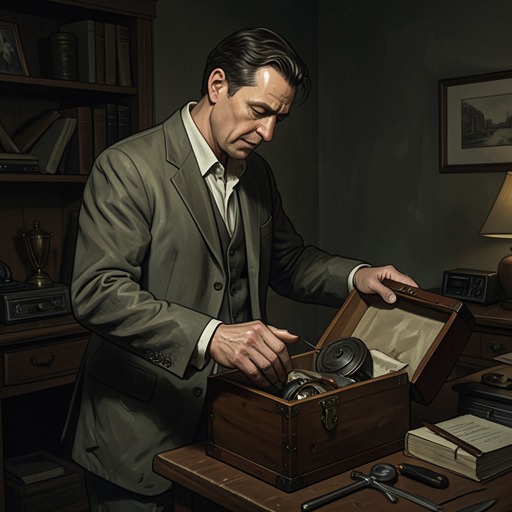
The Whisper ManDominic Barnett is the murdered former tenant of 13 Garholt Street, a figure whose significance emerges through the house he occupied and the crimes concealed within it. His death initially appears to be an isolated local murder, but the investigation gradually identifies his tenancy as the point at which the present-day case intersects with the historical legacy of Frank Carter and the disappearance of Tony Smith.
Identity and Residence
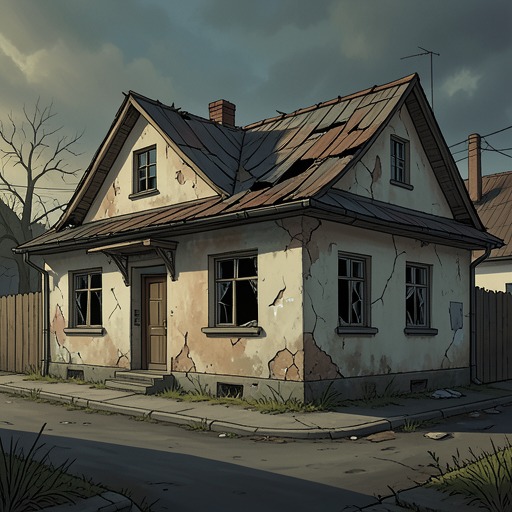
Dominic Barnett is identified as a forty-two-year-old man of Garholt Street, Featherbank. Before his death, he occupied the house on Garholt Street after a succession of earlier tenants. The property had been inherited by Anne Shearing, who had not lived there for decades and instead rented it to numerous occupants. Barnett was the last recorded tenant before the house was sold and became the new home of Tom Kennedy and Jake Kennedy.
The domestic traces he leaves behind are unglamorous but unsettling. Three private letters addressed to Dominic Barnett remain among the new occupants’ mail, each marked either Private or Addressee Only. The letters are debt-collection notices concerning an old cell-phone contract. Their sums are not large, but their threatening tone makes Barnett’s former presence feel like another burden inherited with the house. The correspondence gives him a concrete social identity before the murder: he was not an abstract occupant but a financially troubled man whose unfinished obligations remain physically embedded in the property.
Murder and Discovery
Police treat the death of Dominic Barnett as murder after his body is found at the edge of a stream in Hollingbeck Wood by children playing there. Detective Chief Inspector Colin Lyons reports that Barnett died from significant head injuries. Items recovered at the scene suggest that robbery was not the motive, and the police publicly describe the incident as isolated while increasing patrols and asking for information.
The discovery changes the emotional meaning of the house for Tom Kennedy. Before the murder becomes known, the property already produces an uneasy physical impression: its oddly placed windows and slightly misaligned roof make it appear to watch the outside world, sometimes resembling a beaten or damaged face. After Barnett’s death, that Gothic unease is no longer merely atmospheric. The house becomes connected to violence, concealment, and a history that has not finished working upon its occupants.
Connection to the Older Crimes
Pete Willis examines the property’s tenancy history because he needs to understand what he missed in the years surrounding Frank Carter’s murders, and he regards the Garholt Street house as the place where that investigation must begin. The records show that Julian Simpson rented the property for four years before 1997, the year Frank Carter committed his murders, and remained there until 2008. Simpson died of cancer in that year at the age of seventy. Dominic Barnett then took over the house and lived there until earlier in the year of his death.
Barnett’s importance therefore lies in succession as much as in biography. He follows Julian Simpson, the tenant associated with the period when Carter’s crimes occurred, and becomes the final occupant before the house’s hidden evidence begins to surface. His tenancy places him at the threshold between an old crime and its delayed discovery. The house is not simply a setting in which Barnett dies; it is the material continuity through which the past remains active in the present.
The Remains of Tony Smith
Norman Collins later states that he went to the house on Garholt Street after paying more money to Julian Simpson and waiting in a downstairs room. Simpson eventually returned with a sealed cardboard box, opened it carefully, and revealed the remains of Tony Smith. Collins identifies the child by name. Tony had disappeared twenty years earlier, when Pete Willis saw Tony’s exhausted parents, Miranda Smith and Alan Smith, waiting at the police department. Frank Carter had admitted killing Tony after his arrest, but had refused to disclose where he had discarded the boy’s body.
The account places Barnett inside the afterlife of that concealment. Collins explains that the discovery occurred after Dominic Barnett took over from Julian Simpson, whom he believes had been Barnett’s friend. Barnett did not possess Simpson’s level of respect for the remains, and conditions deteriorated under his care. The wording makes Barnett part of a chain of custodians who treat a murdered child’s body not as the remains of a person requiring dignity and return, but as an object passed between men.
Narrative Significance
Barnett’s murder and tenancy expose the difference between arresting a killer and allowing a victim to go home. Tony Smith’s parents have spent two decades without their son’s body, while Pete Willis carries the memory of the day they waited in the department and the knowledge that Frank Carter’s confession did not provide them with a place to bring Tony back to. The later identification of Tony’s remains gives the old disappearance a physical answer, but it also reveals how many people and spaces participated in delaying that answer.
The house’s architecture reinforces this history of hidden occupation. Its windows seem to stare, its rooms resist an ordinary layout, and beneath the garage floor lies an old mechanic’s pit filled with bricks. In the attic, a child’s room is neatly carpeted and decorated with painted grass, bees, and butterflies, yet it feels as though it was never meant to be lived in by a real boy. These spaces blur domestic life and criminal infrastructure. Dominic Barnett belongs to that blur: a real tenant with debts, a murdered man found in woodland, and a link in the house’s concealed passage from Frank Carter’s crimes to the eventual recovery of Tony Smith’s remains.